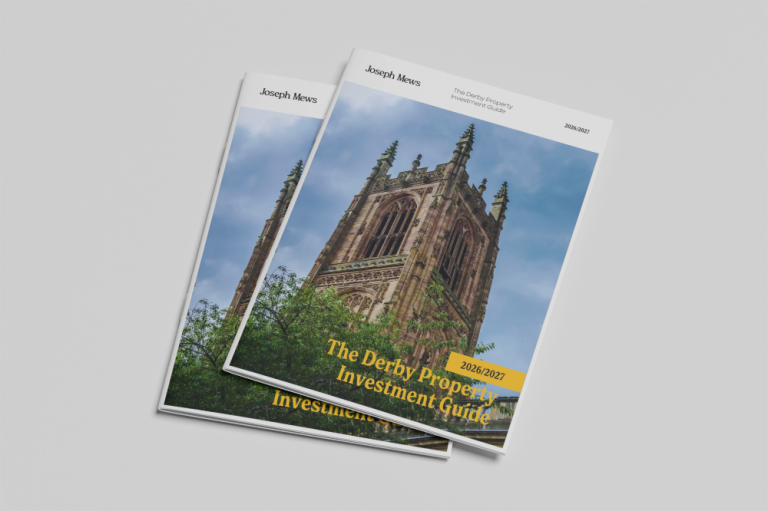

From Potential to Delivery
Derby’s regeneration has moved from promise to delivery – postcode-by-postcode yields, the £600m+ regeneration pipeline reshaping the city centre, and our five-year price forecast for DE1.
- 6.6% – Average yield in DE1, Derby’s city centre
- £204k – Average Derby property price, 25% below the UK average
- 43% – Derby price growth over the past 10 years
The case we made in 2022 is now backed by the numbers
2026 has brought UK property something it hasn’t had in a while: stability. National price growth remains modest, at 2.0% over the past year, but this represents growth built on firmer ground than we’ve seen since before the pandemic – and the gap between London and the rest of the country keeps pushing investors toward cities that offer genuine affordability alongside genuine growth.
Derby remains one of the clearest examples of that shift. When we first wrote about Derby, we were making a case for its potential. Today, we’re reporting on delivery: Becketwell’s anchor venue has opened its doors, Castleward has delivered hundreds of new homes and is still expanding, and the city core DE1 postcode is now delivering the highest rental yields in the city alongside some of its most affordable entry prices.
This guide walks through exactly where that opportunity sits: the postcodes, the price and yield data, the live regeneration schemes, and our five-year growth forecast.
The Derby Market
79.8%
Employment rate, residents aged 16–64
£162,000
Average asking price in DE1
275,000
Derby residents
9.2%
Rental yield on one-bed Derby properties
When we first started talking about Derby’s potential, it was exactly that: potential. A few years on, the picture has changed. Hundreds of millions of pounds of regeneration are no longer on the drawing board; they’re on the ground.

What’s Inside The Derby Property Investment Guide
Nine sections covering everything an investor needs to weigh Derby properly.
- Get to Know the East Midlands: how Derby fits within the region’s connectivity hub, and how its yields compare to Nottingham, Leicester and Lincoln.
- Dive Into Derby: a full 10-year price retrospective by property type, and why flats have stayed flat while houses keep climbing.
- The Future of Derby: live regeneration projects including Becketwell (£200m), Castleward (£100m) and the restored Market Hall.
- Derby’s Market Demand: the population, student, and employment fundamentals underpinning tenant demand.
- Postcode Breakdown: price and yield data across all nine Derby postcodes.
- Rental Market Deep-Dive: yield by bedroom count, showing why one-bed properties out-yield five-bed homes.
- Why Invest in Derby?: the full investment case: affordability, yield, demand and employment.
- Derby’s Future Growth Prospects: our price growth forecast through to 2030.
- Discover More: how our team sources, finances, and manages Derby investments on your behalf.
Frequently Asked Questions About Investing in Derby
Why invest in Derby property in 2027?
Derby offers rare value with real momentum. The average property price is £204,016, around 25% below the UK average of £272,188, yet prices have risen 43% over the past decade. A regeneration pipeline worth hundreds of millions of pounds is set to keep that growth going.
What rental yields can I expect in Derby?
Derby’s city-wide gross yield is 5.04%, in line with regional peers such as Leicester. Yields climb in the city centre, where the DE1 postcode averages 6.6%. One-bed properties perform best of all at up to 9.2%, nearly double the 4.9% typical of five-bed family homes.
What regeneration is happening in Derby right now?
Derby has more regeneration under way at once than it has seen in decades. Major schemes include Becketwell (£200m), Castleward (£100m and still expanding), Friar Gate Goods Yard (£80m) and the Derbion masterplan, which has approval for 1,152 homes. The Market Hall has been restored, and a development partner has been appointed for Market Place.
Is Derby’s property market overheated?
No. Prices rose 2% over the last 12 months, in line with the UK national average, and Derby remains far more affordable than the UK average of £272,188. Our research points to steady, gradually moderating growth through to 2030 rather than a short-term spike.
Who is renting in Derby, and why does that matter for investors?
Derby’s renters come from a large, stable population of around 275,000 residents and an estimated 16,000 to 34,000 students. That creates consistent demand for the smaller, well-connected units that deliver the strongest yields. Employment has also grown faster than across the wider East Midlands, supported by major employers such as Rolls-Royce, Toyota and Alstom.